Quick answer: Feeling low, anxious or angry after a chronic illness diagnosis is common, and it does not mean you are coping badly. The emotional side deserves care just like the physical side. Counselling can help you adjust, manage stress and live well with the condition, alongside your doctor’s treatment.
Being told you have diabetes, heart disease, arthritis or another long-term condition can feel like the ground has shifted. You may be handling tests, medicines and diet changes while also carrying fear about the future. This guide explains what is happening emotionally, when to seek help and what counselling involves.
Why does a chronic illness diagnosis affect my mood?
A chronic disease is a condition that lasts at least one year, according to the US National Institute of Mental Health (NIMH). That is a long time to live with symptoms, appointments and uncertainty, so it is no surprise that feelings follow.
Common emotional reactions include:
- Shock or disbelief, especially in the first weeks.
- Fear about complications, work and money.
- Anger at your body, at doctors or at “why me”.
- Grief for the life and plans you had before.
- Guilt about being a burden on family.
- Tiredness that is both physical and emotional.
Most of these ease as you learn about the condition and build a routine. Some people, however, stay stuck, and that is when extra support helps.
How common is it for physical illness and low mood to go together?
The link is well recognised. The World Health Organization (WHO) says depression is closely related to, and affected by, physical health, and that people may become depressed because of the difficulties of managing a condition. NIMH adds that people with a chronic disease are at higher risk of depression, and that having both tends to bring more severe symptoms of each.
The scale of chronic illness is large. WHO reports that noncommunicable diseases, which include heart disease, diabetes and chronic lung disease, killed at least 43 million people in 2021, or 75% of deaths not related to the pandemic. WHO also estimates that 5.2% of adults worldwide live with depression. You are far from alone.
How do I tell normal sadness from depression?
Sadness that rises and falls with bad news is expected. WHO describes a depressive episode as low mood that lasts most of the day, nearly every day, for at least two weeks. NIMH lists signs such as:
- A persistent sad, anxious or “empty” mood.
- Hopelessness or pessimism.
- Loss of interest in things you used to enjoy.
- Fatigue, sleep changes or appetite changes.
- Trouble concentrating or making decisions.
Illness itself can cause tiredness and poor sleep, so these signs overlap. Do not try to sort it out alone. Tell your doctor what you notice. A screening tool or a conversation with a professional can help, but only a qualified clinician can diagnose.
| What you notice | Usually means | What to do |
|---|---|---|
| Sad or worried on hard days, better on good days | A normal reaction to a big change | Talk to people you trust, keep routines, ask your doctor questions |
| Low mood most days for under two weeks | Adjustment is still under way | Watch it, rest, and consider a counselling session |
| Low mood most of the day, nearly every day, for two weeks or more | Worth professional attention | Speak to your doctor and book counselling |
| Thoughts of death or self-harm | Urgent | Call 112 or go to the nearest hospital emergency department |
When does counselling help with a chronic illness?
Consider counselling if you notice any of these:
- You avoid doctor visits, tests or medicines because you feel overwhelmed.
- Worry about the illness is taking over your days or sleep.
- You are withdrawing from family or friends.
- Anger or tension is spilling into your relationships.
- You feel hopeless about managing the condition.
NIMH states that depression is treatable even when you have a chronic disease, and that treatment usually involves psychotherapy, medication or both. WHO lists psychological treatments as a first-line option. Counselling does not change your diagnosis. It helps you handle what comes with it.
What happens in a counselling session?
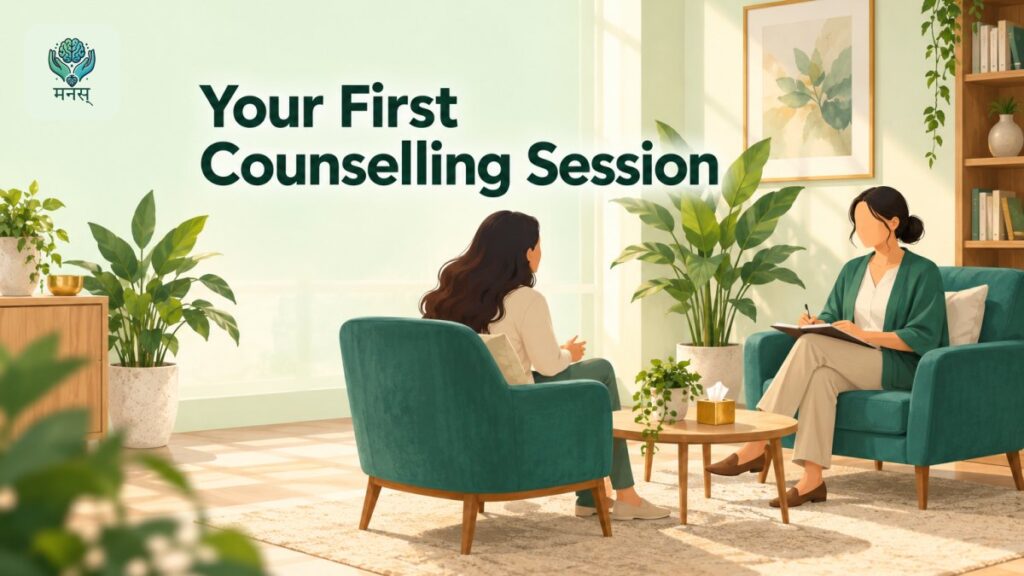
At Manas, a session is 60 minutes, offered online across India or in person in Bhopal. The first session is mostly about listening: what your diagnosis means to you, what has changed, and what you would like to be different. You can read more in our guide to what happens in your first counselling session.
Over time, your counsellor may use approaches such as cognitive behavioural therapy (CBT), which looks at how thoughts, feelings and actions affect each other. Our page on CBT and what to expect explains this. Sessions may cover stress management, handling fear before check-ups, talking to family and keeping up with your care plan.
Counselling sits beside medical care. A counsellor does not advise you to stop or change medicines, and with your consent can stay in step with your doctor.
What can I do on my own, starting today?
- Write down your questions before each doctor visit, so fear does not blank your mind.
- Learn about your condition from reliable sources, and avoid late-night searching.
- Keep one or two fixed routines for sleep and meals.
- Tell one person how you really feel, not just how your reports look.
- Move gently if your doctor approves, and plan one small thing you enjoy.
What if I feel I cannot go on?
If you have thoughts of ending your life or harming yourself, treat it as an emergency. In India, call 112 or go to the nearest hospital emergency department right away, and tell a family member or friend to stay with you. Low mood is common with long illness, but these thoughts need immediate help.
Frequently asked questions
Yes. A long-term diagnosis changes your routine, finances and sense of the future, so sadness, worry and anger are common. If low mood lasts most of the day for two weeks or more, speak to a doctor or counsellor.
No. Counselling works alongside your medical treatment, not instead of it. Never stop or change a medicine without asking your own doctor. A counsellor can help you cope, manage stress and stick to your care plan.
No, you can book directly. If your doctor is happy to share relevant details, with your consent, it helps your counsellor work in step with your medical care. Doctors can also refer patients to Manas.
It depends on what you are dealing with and your goals. Some people use a few sessions to settle after a diagnosis, others continue during difficult phases of treatment. Your counsellor will review progress with you regularly.
Yes. Manas offers online sessions across India and in-person sessions in Bhopal. Online sessions suit days when fatigue, pain or hospital visits make travel hard, and they are the same 60 minutes.
No. Asking for support early is a practical step, like physiotherapy for a stiff joint. Many people find it easier to follow treatment and talk to family once they have a steady space to say what they feel.
Ready to talk to someone?
You do not have to carry a diagnosis alone. Read about individual counselling at Manas, then book a session. Doctors who would like to refer a patient can use our doctor referral page.
Sources
- National Institute of Mental Health: Chronic Illness and Mental Health
- World Health Organization: Depression fact sheet
- World Health Organization: Noncommunicable diseases fact sheet
Plain-language guides on mental wellbeing, based on published research. Counselling at Manas Center is led by Dr. Priya Dubey Sharma, Founder & Consulting Psychologist.